The Best Ideas, From The World's Best Podcasts. In Minutes.
Share
📝 Everything Good Is Correlated With High IQ? The Peptide Hype Test, Why You WON’T Lose Weight & How to Beat Procrastination (Premium)
Published about 2 months ago • 10 min read
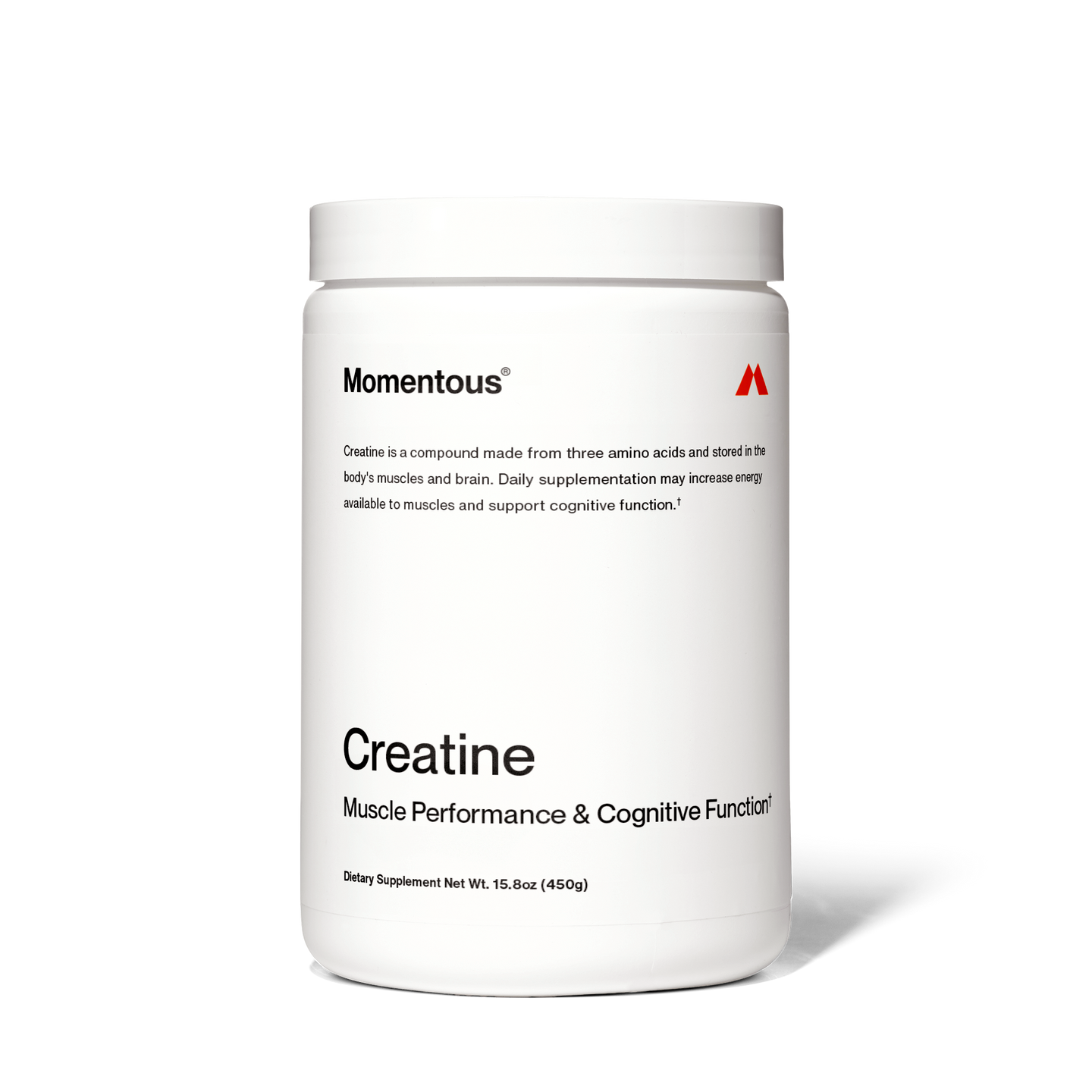
Creatine:One of the most well-researched and effective supplements for enhancing muscle strength, cognitive function, and overall energy production, with benefits extending beyond athletes to general health and aging.
It supports brain health, muscle recovery, and even metabolism, making it a simple, safe, and cost-effective addition to nearly anyone’s daily routine.
I take creatine daily. NEVER trust supplements from SCAMazon. Full of fakes with who knows what inside. Buy direct or don't bother.
This wide-spanning conversation — with some compelling back and forth debate on ethics — covers many existential topics on humanity, society, and politics. Is GDP still a good metric? Where is embryo selection technology heading and what are ethical dilemmas associated with it? Is there an argument for gene editing being a moral necessity? Can we live forever and is that something noble to strive for? Does our meritocracy need critical maintenance? Is space travel going to require a change to the human anatomy? And more, if you can believe it
Peptides are everywhere right now, but how much of the hype is actually backed by evidence? In this episode, Peter Attia breaks down what peptides really are, how to evaluate the science behind them, and why a powerful story, a doctor’s prescription or an impressive testimonial does not automatically mean a peptide works
Got a crazy idea? “Just do it!” While this iconic slogan was formulated in Nike’s marketing department, it perfectly captures how Phil Knight started running toward his crazy idea at full speed, as he explains in Shoe Dog: A Memoir by the Creator of Nike. His story is an entrepreneurial masterclass in what can happen when you lace up your shoes and never stop until you reach the finish line
“Health positive manifold” = the smarter you are the more physically and mentally healthy you are
“Not always to a huge degree, but to at least some degree”
Smarter = better job = more money = more resources for health?
“Gene editing is a moral necessity”
Gene editing and gene therapy are just the next tier of medical technology
Medicine protects us from bad outcomes, so why is this any different?
Especially if the cost to do so approaches zero
Targeted edits to a gene can mimic taking a pharmaceutical for life
Gene therapies are permanent one-time solutions
“We can save so many lives without having to worry about adherence”
“We’re very close to just eradicating tons of diseases with gene therapies”
Example: Lipoprotein(a) or Lp(a) deposits on the walls of your arteries and causes heart disease at very high rates. There are currently no drugs for it, but there are five gene therapies in trials right now.
There’s no reason to worry about side effects when editing genes for specific function
Example: A healthy person has a genetic predisposition to low cholesterol. Because of this, they have better overall health and a lower risk of heart attack. So, given the evidence, why would we assume editing a dysfunctional cholesterol gene to be lower could have any effect other than living a healthier life? The gene simply does what it’s coded to do.
The USA and China are both failing at this…
The Guokao test in China accurately identifies the smartest people, but China misallocates them
The smart people end up working on corrupt bureaucratic things rather than innovation in the private markets
America, alternatively, doesn’t send any smart people to work in government
The government doesn’t pay well and has eternally growing regulations that deter innovators
Not wanting to lose can be more powerful than wanting to win
Phil attended undergrad at the University of Oregon, graduated with a master’s degree from Stanford, and spent a year in the Army. But then, he found himself back at home in his childhood bedroom…
Phil didn’t know what success would look like for him — like his friends with budding careers — but all he knew was that he needed to be successful to live a meaningful life
“Like it or not, life is a game. Whoever refuses to play, gets left on the sidelines. And I didn’t want that.”
Your first employees need to be as mission driven as you are
Jeff Johnson didn’t only help Phil sell shoes, but he wanted to expand his market, he wanted to try new marketing strategies, and he craved feedback — he wrote to Phil from California unanswered almost every day
Jeff believed that “running, done right in the correct spirit and with the proper form is a mystical exercise, no less than meditation or prayer”
Jeff had many people throw soda cans at him and mock him while he was out for runs, so he was personally invested in changing the narrative around running
Jeff saw the potential of Blue Ribbon and asked for a full time job even when the company was $11,000 in debt and losing more money by the day
Jeff became the first full-time employee
Reinvest to become the best
Phil did not believe in having any cash in his bank account, he put every dollar back into the business
Phil put every dollar he earned from his full-time job into the business
Phil had to go from bank to bank to get new and bigger loans for inventory
Build the market first and sales will follow
Phil, Bill, and Jeff focused on celebrating the activity of running rather than trying to sell shoes
Bill wrote a book titled Jogging, which introduced people to the idea that “everyone is an athlete”
The book sold millions of copies and created thousands of new shoe customers
“Business is war without bullets”
Phil was an avid reader, taking lessons from generals and samurai to apply to business
Phil’s three main heroes were Churchill, Kennedy, and Tolstoy
“I had no love of violence, but I was fascinated by leadership under extreme conditions”
Don’t tell people how to do things, tell them what to do instead — you’ll often be surprised by the results
Jeff’s only command from Phil was to go sell shoes, how he did it was all his own
Jeff went above and beyond in everything, even sending customers congratulation cards after they finished races
Jeff was the one that convinced Phil to open a store, or rather, a “mecca for runners”
This store was a place for runners to commune and learn more about running
“Johnson, the aspiring cult leader of runners, finally had his church”
Best evidence based sleep supplements: tart cherry juice, chamomile or apigenin, kiwis, magnesium bisglycinate, omega-3, and melatonin
Use melatonin mainly to reset your sleep timing for travel, jet lag, or another circadian-rhythm problemFor those situations, he typically uses a low dose: around 0.3–0.5 mg, not the common 5–10 mg dose
People generally sleep less well when they share a bed… Reduce movement and noise before jumping straight to separate rooms. Try these
Separate sheets
A setup with less motion transfer
A pillow between you
Earplugs
Copy parts of your home setup when you travel
Bring your pillow
Use a familiar smell, such as lavender
Keep the room cool and dark
The 54321 method for fat loss
5: Be active 5 days a week
Walking, exercise, work, or other movement all count
Rest days are fine
4: Do structured exercise 4 days a week
Not every session needs to be intense
Yoga can count
3: Train hard enough to sweat on at least 3 days a week
2: Strength train 2 days a week
1: Have at least 1 day where your heart rate gets very high
All psych drugs historically work by messing with the 3 big monoamines: serotonin, dopamine, and norepinephrine
SSRIs specifically boost serotonin by blocking its reuptake, so more of it hangs around in the synapse
Raising serotonin can actually lower dopamine
That’s why some people on SSRIs feel emotionally flat or blunted even while their anxiety or depression gets better
Calling SSRIs antidepressants is bad marketing… they actually work better for anxiety than for depression in a lot of cases
Prozac was one of the first and purest SSRIs
Zoloft has a bonus effect of mildly blocking dopamine reuptake too
Lexapro gets used a ton for dysthymia (chronic low grade depressive mood, not just full blown depression)
Changes in the modern world triggering mental health problems
Social media and constant device use are huge contributors
People get isolated and end up with a distorted view of reality shaped by algorithms built for commerce
Some pretty stark trends: less sex, fewer real relationships, more reliance on online porn instead… dropping fertility rates
The socioeconomic divide is a big deal too
It’s driving a ton of anxiety and demoralization, especially in people who already have lower adaptive capacity
A lot of people are actively pushing back by moving toward nature, getting off the grid, and things like that
Stuff that used to be automatic, like being outside, being social, being disconnected from constant information, is no longer the default
You now have to make a deliberate effort to get those things back
Linus lays out his personal framework for thinking about mental health
Hormones and the endocrine system
Inflammation
Metabolism
Stress circuitry
Circadian biology and sleep architecture
Chronic pain taps into your stress circuitry and raises cortisol
That cortisol is actually toxic to the hippocampus and lowers BDNF, which your brain needs for neuroplasticity
The brain never operates in isolation! It’s part of a much bigger system with constant back and forth feedback between neurotransmitters and these foundational biological systems
Psychotic disorders and bipolar target: above 1.5 mmol
Benefits of the ketogenic diet: influences neurotransmitter levels (particularly glutamate, GABA, adenosine), changes calcium channel regulation, changes gene expression, reduces brain inflammation, improves the health of the gut microbiome, improves insulin resistance and signaling
A ketogenic diet has two critical benefits for mitochondrial health: (1) stimulates mitophagy (like autophagy for mitochondria); (2) stimulates mitochondrial biogenesis (increases the number and health of mitochondrial cells)
Mitophagy: gobbling up dead cells in mitochondria to replace them with newer, healthier cells
Autophagy is stimulated by fasting or fasting-mimicking states
Mitochondrial dysfunction is associated with nearly every physical and mental health disorder and disorder of aging
On mitophagy: “The most powerful signal and tool we have right now is related to diet – it’s calorie restriction…fasting and intermittent fasting…and fasting mimicking diets” – Dr. Chris Palmer
Glucose doesn’t tell the full story – high glucose levels are often a symptom, maybe of mitochondrial dysfunction somewhere in the brain and body
It is true that consuming large amounts of junk food and processed foods can lead to dysregulation of glucose levels, but this isn’t true of everyone
Time Saved This Week: 8 Hours, 45 Minutes NEW Premium Notes René Girard, Mimesis, and Conflict | Cynthia Haven on EconTalk with Russ Roberts If you're looking for a great introduction into the profound and controversial mind of René Girard, then these Premium Podcast Notes are for you. Expect to be briefed on how his mimetic theory claims that complete authenticity is impossible, why the scapegoat mechanism is so powerful in both societal and religious contexts, and why we all have self-love...
Time Saved This Week: 17 Hours, 50 Minutes NEW Premium Notes 2024 Predications From Tyler Cowen, Peter Attia, Nial Fergusen and MORE "As crazy as 2023 seemed, could it actually in retrospect seem like the calm before the storm?" Bari Weiss and Oliver Wiseman call up their favorite industry professionals to get their expectations and predictions for 2024 — because it's here whether we like it or not. There are certainly some doom-and-gloom election predictions and potential geopolitical...
Time Saved This Week: 15 Hours, 3 Minutes NEW Premium Notes AMA #14: 2023 Philanthropy, Evening Routine, Light Therapy, Health Metrics & More | Huberman Lab Check out a special full length version of Andrew Huberman’s AMA, typically only available to premium subscribers. In this special episode, Huberman answers questions related to 2023 scientific research contributions, evening and light routines, annual health and fitness metrics, strength training protocols for women, and more. How to...